Friday, September 05, 2008

POINT OF VIEW ... Preeta SAMARASAN

No More Dirty Laundry:
In Defence of Fiction

Début novelist PREETA SAMARASAN on why fiction matters in more ways than one

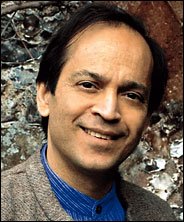
Photographs by Miriam Berkley

A COUPLE OF YEARS AGO, I attended a writers’ conference at which a famous author (who shall remain unnamed) made a disparaging remark about “all these memoirs by twenty-two-year-olds.” A horrified silence followed his comment, and later, during the question-and-answer session, an indignant twenty-two-year-old woman stood up to announce that she was working on a memoir: was he trying to tell her not to write it?

“Yes,” said the famous author. “It’s possible that you are a very unusual twenty-two-year-old who has led a very unusual life, but since that is statistically unlikely in this setting, I think it’s safe for me to say that you should not write that memoir.”

I’ll come clean: I fully agree with that famous author. When I taught creative writing for one semester at an American university, I did all I could to steer my students—most of them eighteen- or nineteen-year-olds—away from writing about themselves. I’m willing to concede that there may be exceptions to this rule; that if you are twenty-two years old but have lived through war or genocide or some truly unusual personal tragedy, you might have something interesting to say about your own life. But too many memoirs and confessional essays masquerading as short fiction are about ordinary lives from which the writer is unable, or unwilling, to gain the healthy distance that breeds valuable insight. These are stories that, to quote a witty friend of mine, “all unfold in dorm rooms and kitchens,” and their writers would do well to take the advice of Peter Carey and other successful authors and write, for a change, about what they don’t know. Yet one can’t only blame young writers for turning increasingly away from fiction: the reading public these days is hungry for “true stories,” and the publishing industry, like any industry, wants to satisfy its consumers. Nonfiction sells, young writers are told repeatedly—can you link this novel to your own life somehow? Readers will love it! These are the terrible words we stubborn writers of fiction have heard too many times from our friends, our parents, our students, our hairdressers: “I could really relate to that book/short story/film, just knowing it was a true story, you know?”

No, I don’t know, actually. I don’t want to know. The movement away from fiction distresses me, and not just because I write fiction, but because it marks the decline of a tradition whose value has rarely been questioned for millennia. Human beings are unique among all creatures in their ability to invent narratives. Why did we evolve to be able to do this? What use is it to be able to convey information that is, strictly speaking, untrue? The answer lies in what writers and readers have always known: that fiction contains greater truths than fact. Since the beginning of recorded history we have made sense of our world with myths and legends and fables, because we’ve understood—without having to say it in so many words—that fact and truth are two different animals, and that freedom from the constraints of the former pushes us towards the latter, forces us to greater and greater feats of empathy, strengthens us emotionally and intellectually. In his magnificent essay, “Notes on The History of Fiction,” E.L. Doctorow asks, “Who would give up [Homer’s] Iliad for the historical record?” He intends it as a rhetorical question; I worry that someday it will not be. “Today,” he declares, “it is only children who believe that stories, by the fact of their being told, are true. Children and fundamentalists.” I wish it were so. Doubtless, Doctorow moves in more sophisticated circles than I usually do, for I routinely encounter surprise and suspicion when I tell people what I do for a living. “You mean,” they say incredulously, “you just make stuff up? The stories you write have never actually happened?” They look at me as if I’ve just claimed to be a soothsayer or a witch doctor—in fact, in Malaysia, those professions would probably inspire more confidence.

Of course I’m ruthlessly generalising for dramatic effect: people who read for pleasure are not bewildered by the very idea of fiction. Yet even they seem to place fiction writers in the same category as sportsmen and film stars: we serve merely to entertain, but being neither as athletic nor as good-looking as those other entertainers, we’re condemned to scribbling away in garrets. The question of whether art’s primary purpose is to entertain or to edify is an ancient one, and it is not my intention to revisit it here. Rather, I urge you to question the assumption that nonfiction informs and educates, while fiction entertains. Fiction is an escape from the real world—or is it?

It can be, of course. I’ve read my share of P.G. Wodehouse and Dorothy L. Sayers and will continue to do so when I need an escape. But serious fiction—what is often referred to as “literary fiction”—is an immersion in the real world, not an outlet from it. It seeks to be more real, more terrifying, less forgiving than the real world; it reaches, as Robert Stone once observed to Ian McEwan in a now-famous exchange, “for the worst possible case.” In response, McEwan came up with one of the most eloquent definitions of serious fiction I’ve ever encountered: “We use these worst cases to gauge our own moral reach.” That single sentence summarises the higher purpose of fiction, the imperative that has fuelled storytellers from Homer to Cormac McCarthy. By winnowing out banalities, deliberately muddying the waters of our moral universe, and asking questions instead of claiming to offer facts, fiction exercises muscles that nonfiction cannot.

PREETA SAMARASAN is the author of Evening Is the Whole Day (Houghton Mifflin/Fourth Estate, 2008), an early version of which won the the Avery and Jule Hopwood First Novel Award. She recently won the Asian American Writers’ Workshop Short Story Award.

Reproduced from the July-September 2008 issue of Quill magazine

Labels:

Wednesday, August 20, 2008

MPH Breakfast Club with ... Preeta SAMARASAN

“COFFEE, CURRY PUFFS AND BOOKS:
WHAT A TANTALISING COMBINATION!”

The 15th MPH Breakfast Club on Saturday, October 25, 2008, at 11.30a.m. to 1.00p.m., will be featuring Malaysian novelist and short-story writer Preeta Samarasan, the author of Evening Is the Whole Day (Houghton Mifflin/HarperCollins, 2008). Samarasan is at the moment working on her second novel, a story about a group of people in Cameron Highlands living in a Utopian community. She has a story in the forthcoming collection, Urban Odysseys (MPH Publishing, 2009).

Preeta Samarasan was born and raised in Malaysia and moved to the U.S. for her high-school education. She received her MFA from the University of Michigan, where an early version of her novel won the Avery and Jule Hopwood First Novel Award. She recently won the Asian American Writer’s Workshop short-story award. She lives in France.

Eric Forbes will be introducing Preeta Samarasan while Janet Tay will be moderating the session.

Photograph of Preeta Samarasan courtesy of Miriam Berkley

Date October 25, 2008 (Saturday)
Time 11.30a.m.-1.00p.m.
Venue MPH Bangsar Village II Lot 2F-1 (2nd Floor), Bangsar Village II, No. 2 Jalan Telawi 1, Bangsar Baru, 59100 Kuala Lumpur, Malaysia
Phone (603) 2287 3600

Food and refreshments will be served
All lovers of literature are most welcome


Preeta Samarasan will also be doing a reading at readings@seksan at 3.30p.m. on the same day. Seksan Design is at No. 67 Jalan Tempinis Satu, Lucky Garden, Bangsar, 59100 Kuala Lumpur

***

“… THE LONG SLOW BANQUET of a fine novel. Preeta Samarasan’s delicious first novel, set in Malaysia in 1980, provides such a feast. ... Her ambitious spiraling plot, her richly embroidered prose, her sense of place, and her psychological acuity are stunning. Readers, responding to the setting, will immediately compare her to Kiran Desai. I think Samarasan’s dialogue and description are reminiscent of Eudora Welty, another woman who knew how to write about family and race and class and secrets and heat.” Allegra Goodman, in The New York Times Book Review

“A MAGICAL, EXUBERANT tragic-comic vision of postcolonial Malaysia reminiscent of Rushdie and Roy. In prose of acrobatic grace, Samarasan conjures a vibrant portrait, by turns intimate and sweeping, of characters and a country coming of age. The début of a significant, and thrilling, new talent.”
Peter Ho Davies, Man Booker Prize-longlisted author of The Welsh Girl (2007)

“RICH, QUIRKY AND COLOURFUL, Evening Is the Whole Day captures not just the sense of a family struggling to deal with its past, but the crazy uncertainty of a country coming to terms with itself. Often funny, sometimes sad, never predictable, this is a novel that announces a unique talent.” Tash Aw, the author of The Harmony Silk Factory (2005)

“A WONDERFULLY ENGAGING NOVEL, poignant yet comical, about the contradictions and hazards inherent in a modern, postcolonial world.” M.G. Vassanji, author of The In-Between World of Vikram Lall (2003)

“PREETA SAMARASAN’s passionate, striking book, stunned with light and heat, is full of the memory of enchantment and the enchantment of memory. Samarasan cultivates with brilliance the taut battle between the public and familial being, and the hidden and fragile inner self, trapped in a world of myth and mystery.” Susanna Moore, author of One Last Look (2003)

“SOMETIMES A BOOK COMES BY that doesn’t just grab you—it embraces you entirely, seizing your senses and emotions, so much so that the moment you finish it, you go back to the beginning and start reading all over again. Sometimes, a book comes by that makes you laugh out loud at almost every page and yet hurts you and hushes you with its lyrical beauty. ... One such book is Evening is the Whole Day by Malaysian Preeta Samarasan. ... It is the rich imagery of the language that grabs the reader’s attention with experiences that most Malaysians will recognise: eating Sunshine bread, Marie biscuits and Milo (straight from the tin); raffia string around a suitcase; the skirt zipper that works its way to the hip; whining drunken man at the gate .... Preeta’s rich, multi-layered approach soaks into the language, characters, situations and events, creating a novel that is uniquely Malaysian but not overly nostalgic. Her characters flavour their conversations with Malaysian English peppered with Tamil expressions, easily understood within context.” Saras Manickam, The Sunday Star

“AN IMPRESSIVE DÉBUT ... At one level, it is a nuanced portrayal of the trials and tribulations of one immigrant family, but at a deeper level it deals with issues of identity, of the underclass and of the deep divides which create classes in a nation.” Deepika Shetty, The Straits Times

“AN IMAGINATIVE, irreverent, funny, entertaining, beautiful, and unapologetically Malaysian creation. ... Samarasan presents, through the multifarious and difficult relationships among the inhabitants of the Rajasekharan household, our country with its complexities of class, race, religion, gender and colour.” Lim Soon Heng, TimeOut Kuala Lumpur

Labels: ,

Friday, June 20, 2008

2008 Ubud Writers & Readers Festival

Tri Hita Karana: God, Humanity & Nature
Ubud, Bali
October 14-19, 2008

The established will meet the new.
The East will cross paths with the West.
It will be a literary celebration like no other.

Tri Hita Karana is the theme of the 5th International Ubud Writers & Readers Festival in Ubud, Bali. Tri Hita Karana is a Balinese Hindu concept that translates as the relationship between God, Humanity and Nature. Invited international guests include acclaimed Indian author Vikram Seth, U.S. novelist John Berendt, Mexican author Alberto Ruy-Sánchez, literary livewire Nury Vittachi, Australian novelists Carrie Tiffany and Alexis Wright, 2007 Man Booker Prize-shortlisted author Indra Sinha, Indian poet Tishani Doshi and Canadian novelist Camilla Gibb.

This year’s festival celebrates two dynamic Chinese women authors: Geling Yan and Lijia Zhang. Yan is one of the most acclaimed contemporary novelists and screenwriters writing in Chinese and English today. Her career began in the late 1970s as a journalist covering the Sino-Vietnamese border war and her first novel was published in China in 1985. In 1989, following the massacre at Tiananmen Square, she left China for the United States. Her novels include The Lost Daughter of Happiness and The Banquet Bug (or The Uninvited). Zhang’s spirited memoir, Socialism Is Great!, tells the tale of her life as a former Nanjing rocket-factory worker who spent 10 years among 10,000 comrades, participated in the Tiananmen Square protest and ended up an international journalist. The effusive Zhang is guaranteed to bring the house down with tales of how having wavy hair betrayed a pretend communist’s bourgeois affinities.

The festival will also be spotlighting the emerging stars of Southeast Asia with Malaysia-born Preeta Samarasan and Chiew-Siah Tei and Indonesian Andrea Hirata. Samarasan’s début novel, Evening Is the Whole Day (4th Estate/HarperCollins, 2008), has been described by Peter Ho Davies as “a magical, exuberant tragic-comic vision of postcolonial Malaysia reminiscent of Rushdie and Roy,” while Chiew-Siah Tei is a bilingual writer whose first novel, Little Hut of Leaping Fishes (Picador, 2008), was longlisted for the 2007 Man Asian Literary Prize. Set against the backdrop of an ever-changing China, it is a historical novel written with much freshness and a striking immediacy. Xinran, author of The Good Women of China, called it “a powerful and important story of duty and sacrifice in a time when China was threatened on all sides by the West and the smell of opium filled the air.” Andrea Hirata is a young Indonesian author who has become something of a local hero with the publication of his first best-selling novel, Laskar Pelangi (or The Rainbow Warriors). Laskar Pelangi has sold more than half a million copies in Indonesia, a feat that has never been achieved in Indonesia’s literary history. This charming memoir is a story of Andrea’s childhood and friendship with nine boys (the eponymous “rainbow warriors”), growing up in a poor tin-mining community on Belitung Island. His story of school and the inspiration offered by his teacher is refreshing and endearing and reveals the rich rewards that come from sincere friendship.

“Collision of Cultures” will be one of the underlying themes of the 2008 Festival with established and emerging writers confronting the issues of Us and Them. World religions, languages and lifestyles will be examined and discussed together with the subject of migration and its impact on communities. Hot debates addressing crime and punishment in Asia, and more specifically drugs, civil rights and moral dilemmas, will also take centre-stage.

There will be unparalleled dialogue this year in her at Ubud, which lies on the fertile crossroads of two rivers, two oceans and two continents―Asia and Australia. The exotic retreat of the rich and famous in the 1930s, Ubud has now re-invented itself as an international rendezvous for writers, poets and artists from all parts of the world. It has become the stage where voices from China, India, South Korea, Japan, the Philippines, Malaysia, Singapore and more are heard. In 2008 this partnership will be strengthened with writers from beyond the region, from the heart of Africa and Central America.

Satisfy your hedonistic passions with our acclaimed stars by luxuriating in the lush surroundings of Ubud’s elegant hotels and gracious homes at our literary lunches and dinners. Join our Long Table feast in the rice fields featuring acclaimed chefs and food writers as they showcase Bali’s vibrant food culture. Enjoy workshops that teach the craft of writing or cultural activities that offer a peek inti the mystical, magical world of Bali, in between book launches, performances, exhibitions, cocktail parties and celebrations into the early hours of the morning.

On the Indonesian front, we will be featuring a tribute to the late Sutan Takdir Alijshabana, acclaimed writer and father of Bahasa Indonesia, modern Indonesian as we know it today. The Ubud Writers & Readers Festival will honour the contribution he made to the development of this language with a night of performance and readings under the stars in one of Ubud’s majestic temples.

And if that is not enough, the 2008 Festival will take to the streets, literally, with international street performers matching their wits against Ubud’s youth in a carnival of skill and artistry.

Labels: , , , , , , , ,

Wednesday, May 28, 2008

4 Delectable Asian Novels

All titles available at MPH Mid Valley, Kuala Lumpur

Labels: , , , , , , ,